Getting a Fresh Peptide Vial Ready for the Bench
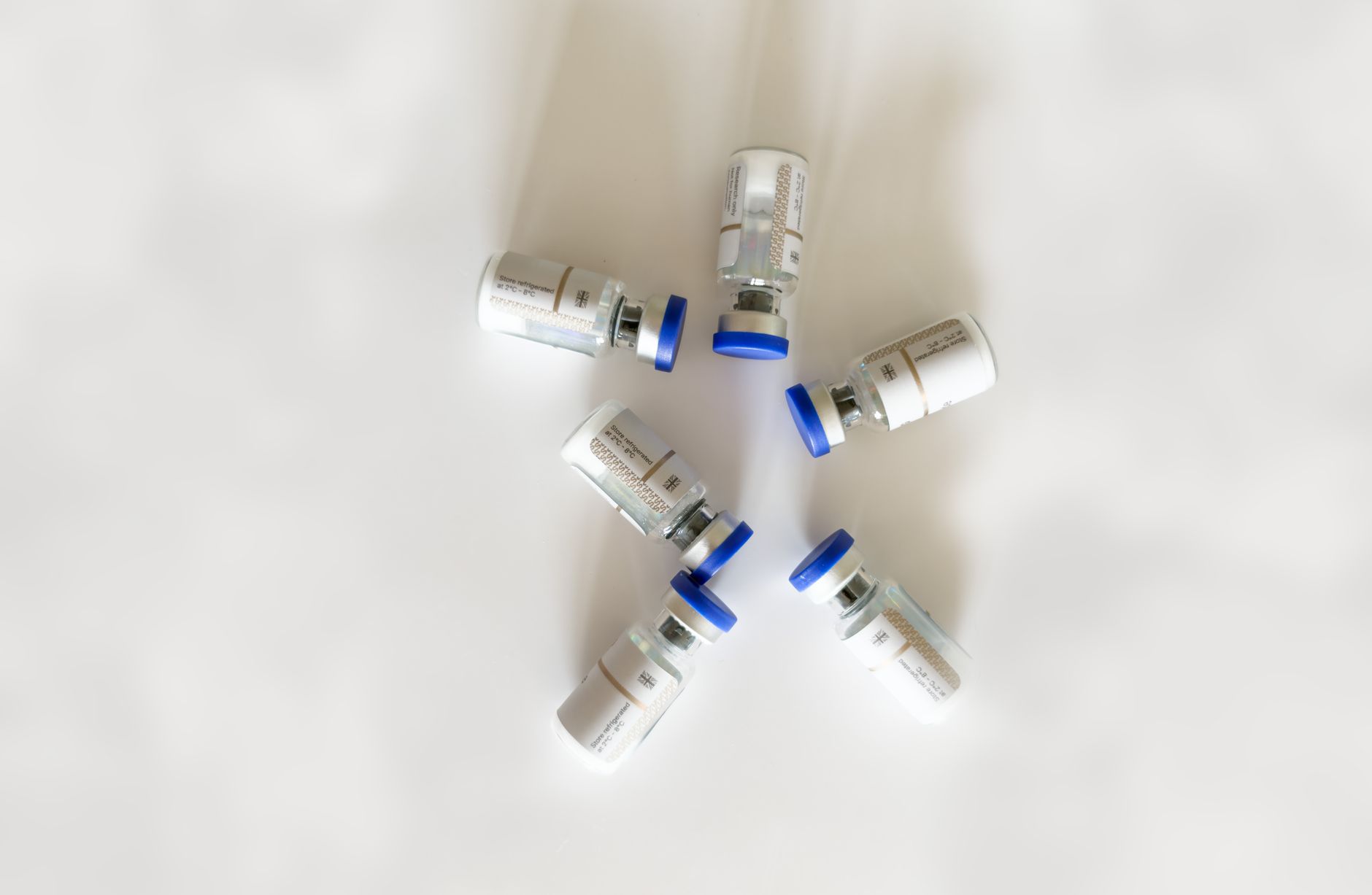
The most common way a peptide vial gets ruined isn’t heat, light, or time on a shelf. It’s the first sixty seconds after the researcher opens the box, when an impatient hand shoots a stream of water straight into the powder and watches a careful calculation dissolve into guesswork. The material is fragile in ways that aren’t obvious from the outside, and almost every mistake worth avoiding happens during reconstitution and the handling that immediately follows.
Bacteriostatic water vs. sterile water for mixing your vial
Both liquids look identical in the ampoule, but they behave differently once a peptide is in solution. Plain sterile water carries nothing to discourage microbial growth, so a reconstituted vial starts degrading the moment anything airborne gets introduced during repeated draws. Bacteriostatic water contains a small amount of benzyl alcohol, roughly 0.9 percent, which suppresses that growth and buys the solution a usable lifespan of weeks rather than a day or two.
For anything you plan to draw from more than once, bacteriostatic water is the default. Reserve plain sterile water for a vial you intend to use in a single sitting, or for the rare compound that reacts poorly with benzyl alcohol. When in doubt, match whatever diluent the supplier’s documentation specifies, since a handful of sensitive peptides have real preferences here.
Slow injection down the glass vs. blasting the powder directly
Here is the step that separates a clean reconstitution from a compromised one. Angle the needle so the water runs down the inside wall of the vial rather than firing directly onto the lyophilized cake. The force of a direct stream can shear the peptide’s structure, and foaming is a visible warning that you’ve done exactly that.
After the water is in, do not shake. Set the vial down and let it dissolve on its own, or roll it gently between your palms and swirl it in slow circles. Most powders clear in a few minutes; some need ten or fifteen. If a faint haze or stubborn particles remain, give it more time before assuming anything is wrong. Shaking introduces air and bubbles that make accurate draws harder and can damage the very molecule you’re trying to preserve.
Insulin syringe units vs. milligram math when measuring a dose
Dosing errors usually trace back to confusing the units on the syringe with the micrograms in the solution. An insulin syringe is marked in units, where a standard U-100 syringe holds 100 units per milliliter. Those units measure volume, not the amount of peptide.
The math is simpler than it looks once you separate the two. Take the total peptide in the vial, say 5 mg, which is 5,000 mcg, and divide it by the volume of water you added. Reconstitute that 5 mg vial with 2 mL and each milliliter holds 2,500 mcg. Since 1 mL equals 100 units, every unit on the syringe carries 25 mcg. A 250 mcg target is therefore 10 units. Change the water volume and you change that ratio, so write the concentration on the vial’s label the moment you finish mixing. Guessing later is how a dose drifts off by a factor you won’t notice until the data makes no sense.
Short-term fridge storage vs. long-term freezer handling with nuvia peptides
Lyophilized powder is forgiving; reconstituted solution is not. Before mixing, an unopened vial can sit cold and stable for a long stretch. Once water goes in, the clock starts. A reconstituted vial belongs in the refrigerator at roughly 2 to 8 degrees Celsius, where it typically stays viable for several weeks depending on the compound. Keep it toward the back, away from the door, where temperature swings are smallest.
For material you won’t touch for months, the freezer extends shelf life considerably, but freeze and thaw cycles are the enemy. Each thaw stresses the peptide, so aliquot into single-use portions before freezing rather than repeatedly refreezing one vial. Suppliers such as Nuvia Peptides generally publish handling specifics per product, and those notes are worth matching exactly rather than applying one blanket rule to everything on your bench.
Treat every one of these steps as non-negotiable. A vial handled carelessly in its first few minutes can look perfectly fine, dissolve perfectly clear, and still give you numbers that quietly lie to you for the rest of the study.